

For such a loaded neologism, “hipster” has really endured. First used as a snarky slur to describe Williamsburg college-educated kids seeking low rents and ways to distinguish themselves from the new Giuliani yuppies, its pointed characterization has stretched from the freak-folk stylings of Devandra Banhart and Animal Collective, those that shattered the indie glass ceiling into the mainstream like MGMT, Peter Bjorn & John, and Grizzly Bear, and so-called “hipster rappers” of the blog era like Danny Brown and Das Racist. As we near almost 30 years of hipsterdom, the cultural influence it insisted against has become so ubiquitous that you could ask a kid at Trans-Pecos or the Empty Bottle about hipsterdom and they might say “What’s a hipster?”
In between the line of irony and sincerity is where acts like 300SkullsandCounting, The Femcels, Bassvictim and others play. Authenticity as a marker for quality has been dissolved, because it’s implied now that someone’s always joking, always in on the joke, and deathly serious about it. This is not an indictment or criticism but rather a configuration of contemporary hipsterdom that has adjusted in the face of musical amorphousness. Genrelessness has become so passé that affectation comprises a large chunk of how people interact with these acts; the referentiality is the point. Yet these are not “online” acts—certainly they are favored and frequented by people with copious screen time, but the nu-hipster scene privileges in-person connection and a divorcement from the disassociation of social media.
Contrast this with the most avant-garde acts of the 2010s: Oneohtrix Point Never, Death Grips, Macintosh Plus and Dean Blunt, among others. In the earliest stages of social media, these artists played with the medium as a psychological wall against their audiences, with the aforementioned acts either having anonymous aliases or being completely anonymous themselves. Recognition and identification come off as anathema; as the shine of chillwave and buzzbands started to fade, being unknowable lended an air of authenticity that was paramount to making them some of the most thrilling acts of the era.
This scene is not to be confused with “indie sleaze”, whose revival was murky and conceptually lacking at best. That scene basically lived and died with the parochial media insularity that typified way too many Dimes Square pieces, though its (sparse) contributors in music have buoyed their trades into continued careers. The Dare is now probably better known as Charli xcx’s DJ rather than the hip James Murphy knockoff he broke out as, Frost Children and Snow Strippers are almost elder statespeople at this point, having carved a solid niche in the festival circuit, and while it’s admirable that Fcukers retain an agent good enough to get their dogshit club music on primetime TV, the less said about them the better. But for the purposes of this piece, this type of nihilist scenester output might as well have gone the way of the dodo.
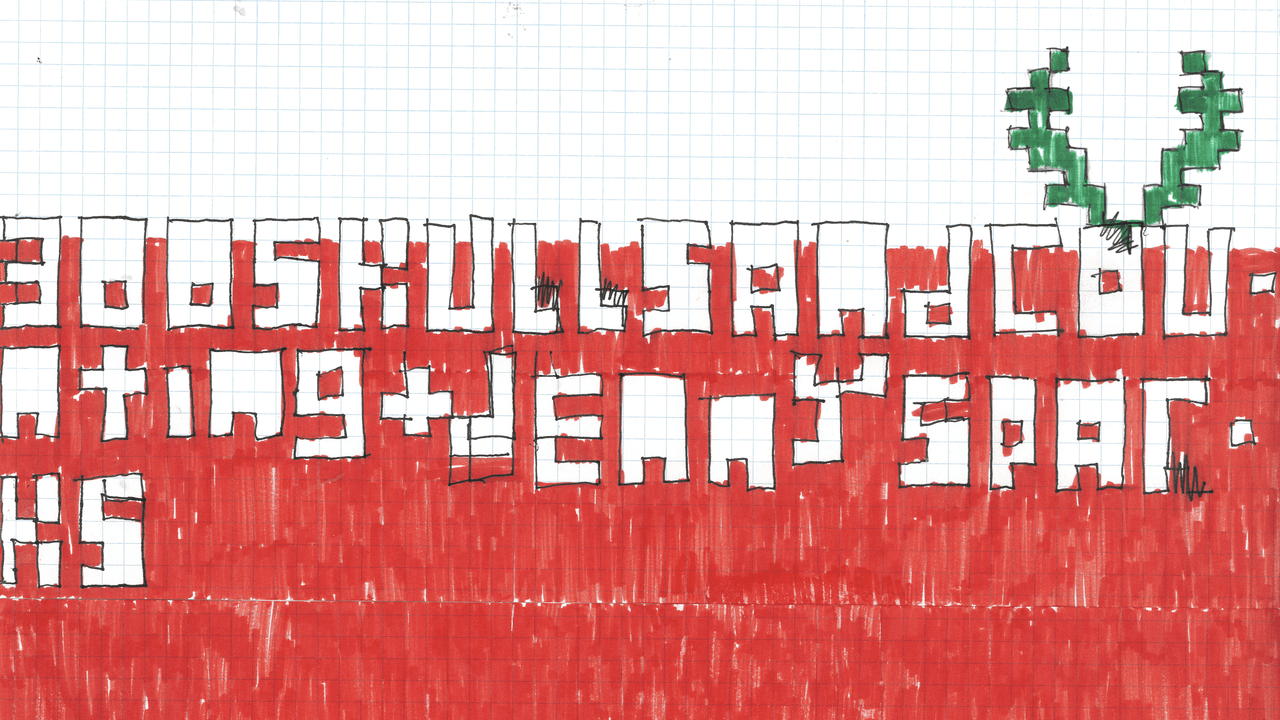
A long part of that is because, well, people don’t care about looking cool anymore. They do on a subconscious, subtle level of course but nu-hipster wears their references and pleasures on their sleeve, and any sort of guilt or embarrassment for being into something “gauche” is largely discarded. 300SkullsAndCounting & Jenny Sparks’ THIS IS SPA TOWN! stands as the most extreme example so far, with its Brokencyde screams and working-class British bassline harkening back to 240p Youtube freestyles in 2007. The album serves as polarization flashpoint in the same way 100Gecs did half a decade ago, except this time, the album’s cartoonish Britishness begs to either lapped up or blithely dismissed by curious Americans, while inspiring patriotism or labored eyerolls to Brits who are much more familiar with the subculture.
To quote friend of the blog Sprezzatura, “THIS IS SPA TOWN! sounds like walking into your music GCSE class or local youth club, realising the only other kids that wanna make stuff are the loner scene kid and the bassline junkie from the estate with a pirated DAW, and deciding to make it work anyway.” And this is true of many of the other English acts wrapped up in this scene; the Chica Mob trollishness of the Femcels, the “Like a G6” indebted Bassvictim, the bedroom pop with a capital B of ear. The nu-hipster’s music is all intrinsically based around detritus, just as New Weird America’s acolytes rehabilitated Old Weird America and Ariel Pink and James Ferraro mined 80s tape loops to melt guitar riffs, so too does this new generation, but now with artists who were critically panned in their day. Impossibly, Enter Shikari, Owl City, and deadmau5 have become lodestones for a certain type of zoomer.
The caveat among this group is that you take their excursions into previously discarded genres completely seriously. Which is all well and fine, but the difference is that 20 years ago, the natural subdivisions of scenes meant that there was no expected ironic affect. YourSceneSucks.com worked as a send-up because many of those people earnestly believed in their style, their taste, their in-group signals—except of course, the hipster. The scrambled semiotic nature of the wider internet now muffles this earnestness, causing all these outre genre callbacks to be easily questioned if you’re not completely on board with the program. There’s always that twinge of “in on the joke” with nu-hipsterdom, in a similar vein as everyone dressing like the Smith College Girls now. This isn’t a condemnation of zoomers though, lest I start sounding like annoying millennial, but rather how culture has been filtered and atomized on so many levels that layers of simulacra pile on top of each other, and how that specifically has influenced the cultural attaché of modern music.
The counterpoint to the above, then, is the friends& collective. friends& is the most explicitly ironic yet explicitly political group of this whole milieu, citing Pierre Bourdieu, Guy Debord and most glowingly, Mark Fisher, as theorists in their call to arms. While their memetic Internet-brained concoctions serve as the inversion of most disquieted laptop twee, it’s also about something in the way much nu-hipster music isn’t, making friends& more liable to stay in the public imagination. Rather than divisiveness as an aesthetical tactic, it’s divisive deliberately to suggest detournement, however difficult that may be in 2026.
All the acts I’ve listed so far have been white—and the nu-hipster usually is—but much of nu-hipster canon has been defined by black music in tandem. xaviersobased is certainly the poster child; if he wasn’t a rapper his glitchy beats could’ve slotted into the laptop twee wave, and his swag era style makes him look like a lost Cory Kennedy boyfriend. thirteendegrees’ referentiality is staunchly more pointed, gesturing at Rich Kidz and Travis Porter in the same way someone like 300Skulls does for Hadouken!. And even the Carti disciples fit the bill somewhat; while rage is a more mainstream phenomenon Osamason’s “Popstar” shares a reverence for the “soft grunge” Tumblr aesthetic. Probably the most nu-hipster of modern rappers, however, is Lucy Bedroque. Theirs is a typification of nu-hipster tenets: DAW insanity, genderlessness, re-examination of discarded aesthetics and modes (in this case, visual-kei). Lucy is unique though in their adherence to the Dir En Grey meets digicore modality; there’s never really been anything like it, and their individuality skirts the placid signifiers that make up less distinctive acts.
In large part I’ve tried to flesh out my thoughts on a nebulous archetype of artist that some won’t be convinced even exists—I get “I know when I see it” isn’t the best argument—but my thesis’ North Star rests on the ur-hipster, Hipster Runoff’s own Carles. His incendiary essay “How Indie Finally OFFICIALLY Died” symbolizes a man tired of hype, tired of the game, tired of the internet. And while I do think the situation is better now (with less money begets less headache), the nu-hipster sphere does strike me as privy to the same lack of authenticity Carles bemoans in his screed. Except now, the culture moves on from microtrends and movements at an exponentially faster rate than in 2012, thus speeding up the disposability of what’s new. What Hipster Runoff would be blogging about for a couple months 15 years ago would probably be passe in 10 days now, such is the hype cycle. Which is not an indictment of this music either, rather, any sort of iconoclastic appeal just wears off too quickly. If latent authenticity and nostalgia are going to be sold to you anyway, the kids are smart for getting ahead of it.